About
Justin Baird
FRSA, Fellow of the Royal Society of the Arts
When I was a kid, I built my own speakers. My dad was a mechanical engineer, and I used his tools to make speaker enclosures with parts from Radio Shack. I also played saxophone and joined rock bands. Music and the equipment that made it happen were part of the same fascination. When I was around a mixing board, I realised I did not want to just turn the knobs. I wanted to build what happened underneath them.
Music and engineering grew up together for me. I studied both at the University of Miami, as a double degree in music and in electrical engineering and computer science, then started my career at Meyer Sound Labs in Berkeley, California, working on the loudspeakers and electronics used in theatres, concert venues, live sound touring systems, and recording studios. That sometimes meant research at a bench. It also meant repairing an amplifier suspended above the stage of The Lion King on Broadway.
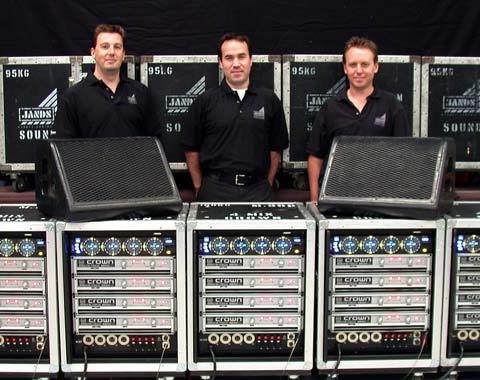
You learn quickly that something working once in a workshop is only the beginning. It has to work every night, for the people depending on it. I carried that lesson into Lake Technology and Dolby, where I led teams developing professional audio equipment used at large live events. There is a lot of engineering between a musician playing a note and an audience hearing it properly. One wrong resistor does not just break a prototype; it can break the thousands of boards already shipped and sitting in venues. Getting something to work on the bench is only half the job. The other half is making it work in production, reliably, across thousands of units.
At Google, the scale changed. I worked on bringing YouTube and early Android devices to people across Asia Pacific. I was still interested in the same practical question: what could people do with this technology once we put it in their hands?
One of my favourite answers was Underwater Street View. We took the idea of exploring a street on a screen and brought it beneath the ocean. Working with people including diving pioneers Ron and Valerie Taylor, we developed a camera system that could photograph reefs while a diver moved through the water. A floating GPS receiver helped us work out where the images belonged on the map.
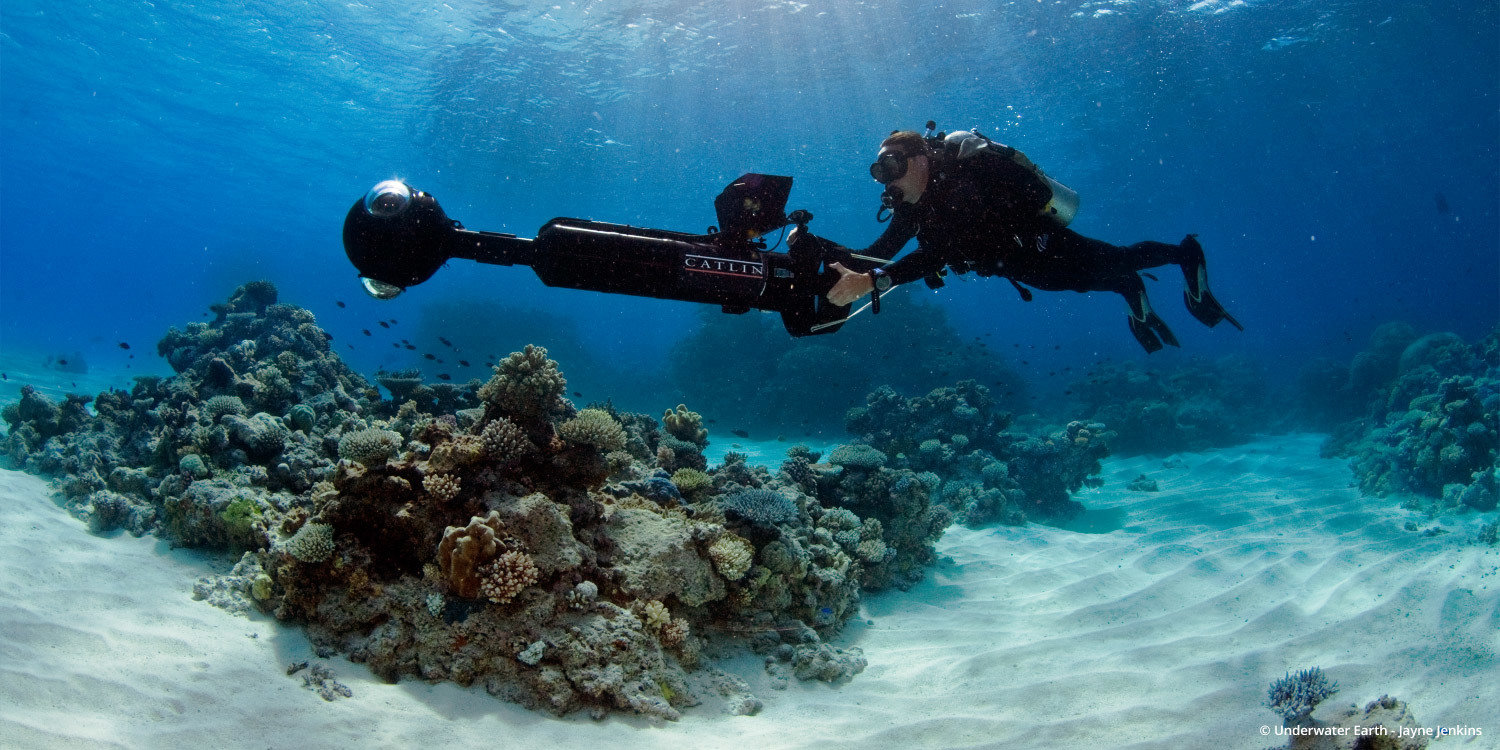
Most people will never dive on a coral reef. We wanted them to be able to experience one anyway, and to see what was worth protecting. The work later connected with Chasing Coral, the documentary about the loss of the world's coral reefs. The launch image, three sea turtles over a reef off Heron Island, has since been seen by more than a billion individual people.
That environmental interest continued. I contributed to Damon Gameau's film 2040, which explores a better future through solutions already available, and co-founded Verity Nature, working on technology to make the evidence behind carbon projects more trustworthy. Creativity has a part to play here too, in helping people imagine something better and giving them a practical way to work towards it.
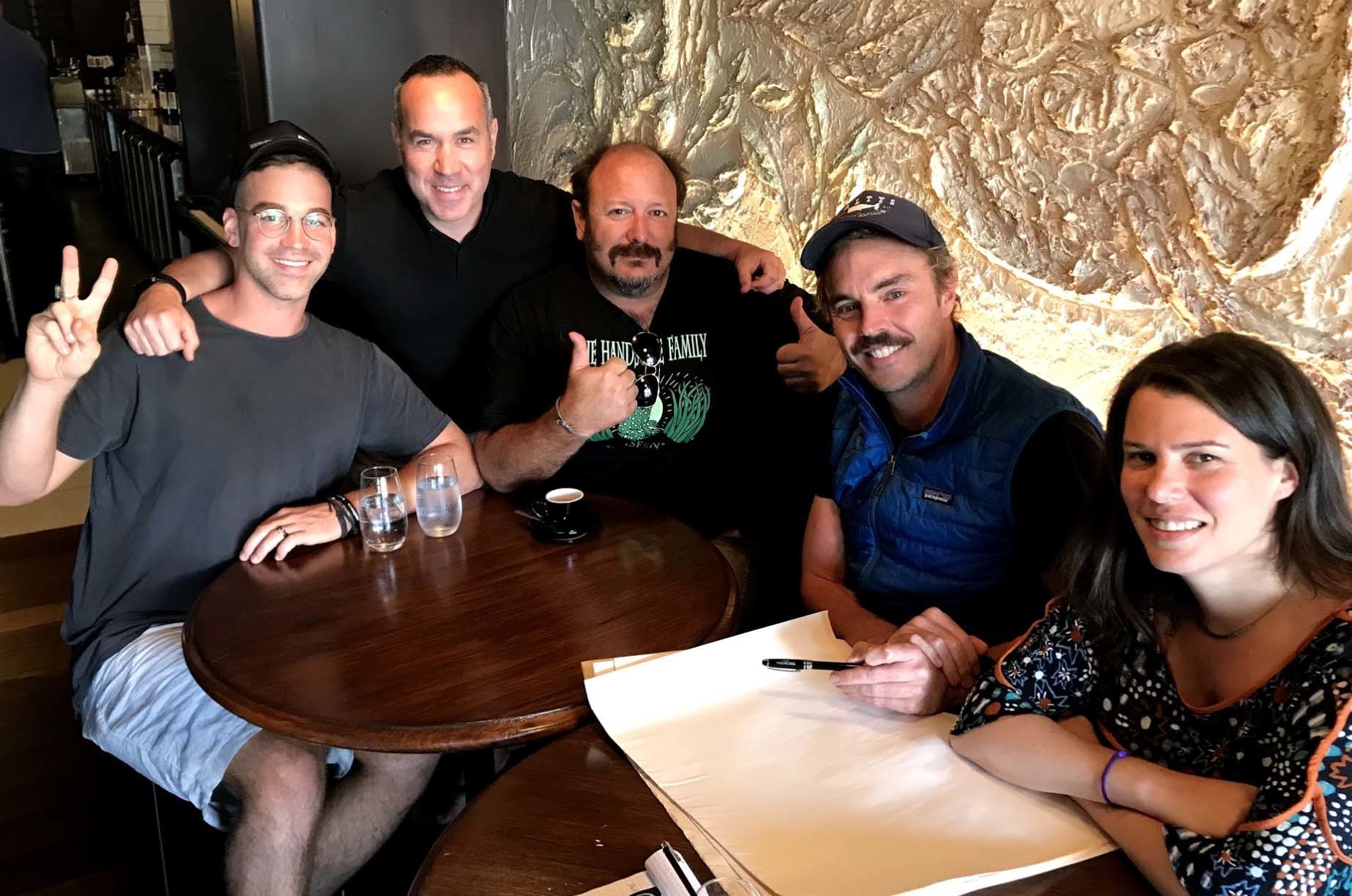
I've also spent years helping other people get their ideas built. At Accenture, that meant establishing studios where teams could make and test new products. The team I built there was called the Liquid Studio: full-stack, hardware and mechatronics engineers working together, launched across seven markets. At Microsoft, it meant working alongside startup founders across Asia Pacific. The job was, put simply, to be a technologist in the founder's corner. I've helped build companies and led technology teams, including in logistics at DHL. The work changes with the industry, but you still have to understand the people using something and get the details right enough for it to be useful.
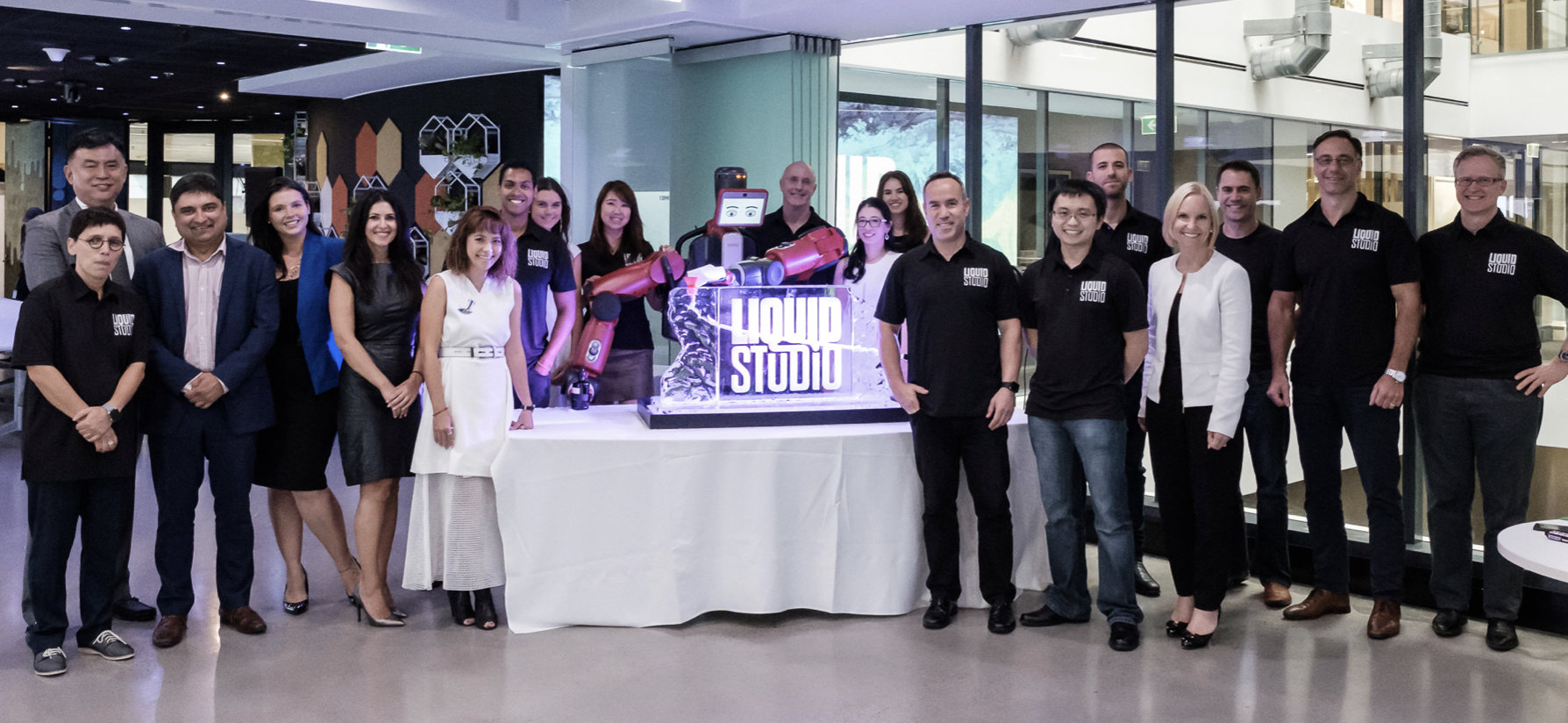
And sometimes you have to teach a robot to play the marimba.
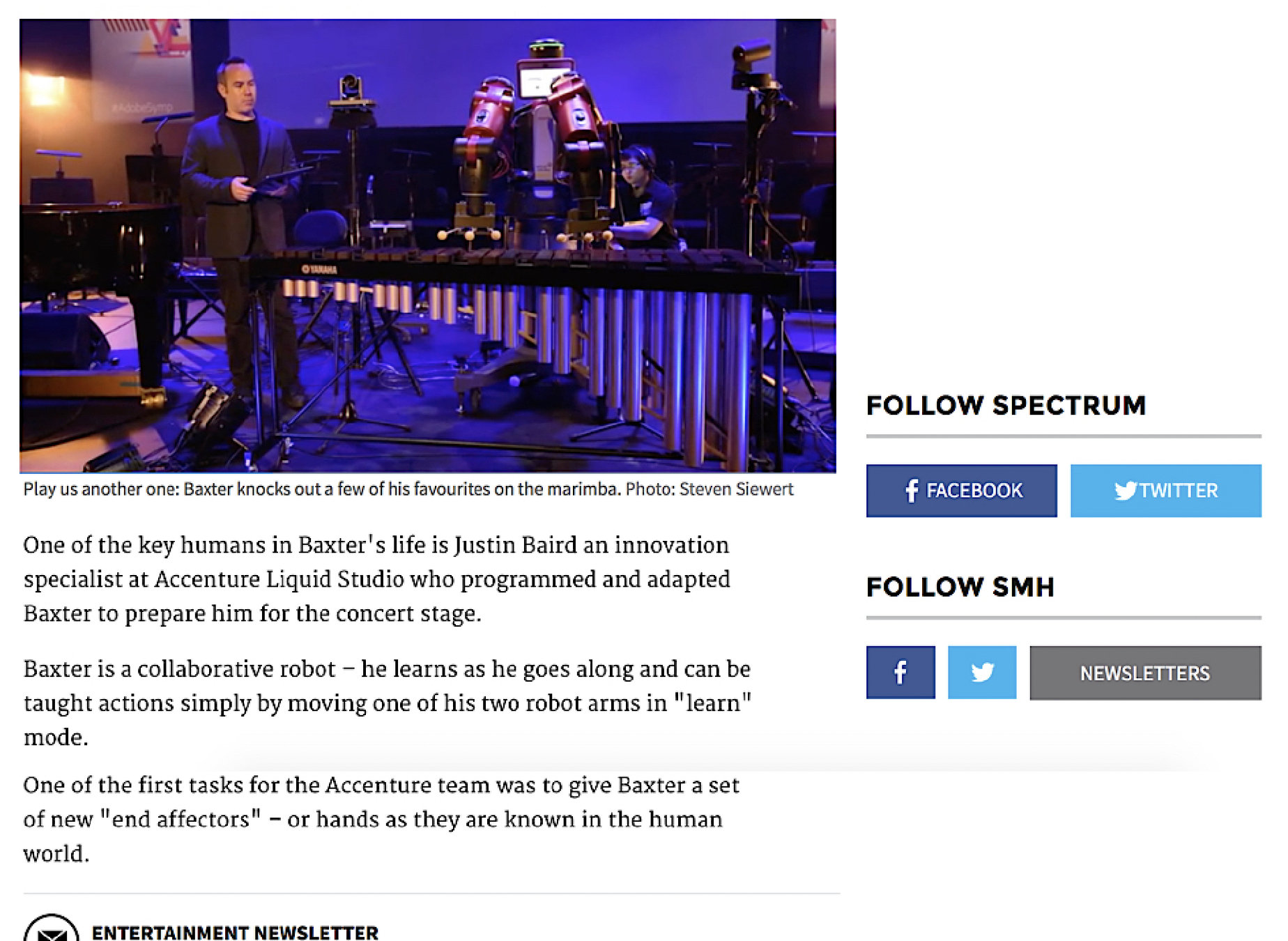
That project began when I saw a Baxter robot doing repetitive work and wondered what else it could do. Baxter went on to play marimba, performing composer Charlie Chan's work with a live orchestra at the Sydney Opera House. The project also included working with Google's Magenta team on software that let it improvise. We built custom end effectors holding marimba mallets, three in each hand, and the trained model ran on a Raspberry Pi in a backpack strapped to the robot, listening to the pianist over MIDI and improvising in response. Getting there involved cancelled plans, collaborators who kept going and, at one point, putting a grand piano on an expense account.
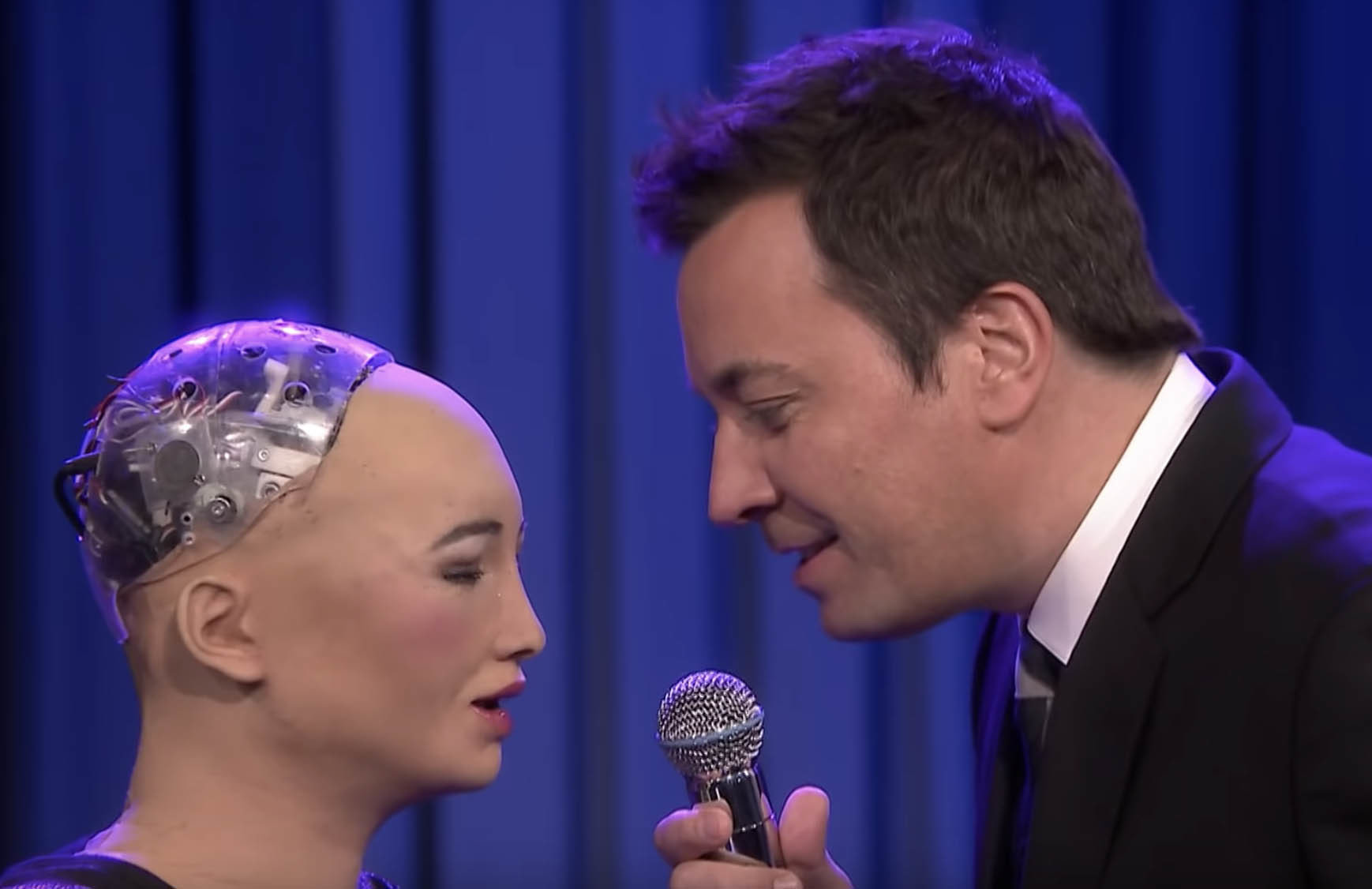
Music kept opening doors into other kinds of work. I helped give Sophia the Robot a singing voice for her duet with Jimmy Fallon. Her speaking voice had been built from careful studio recordings of individual sounds, but no one had ever asked it to sing. Perfect pitch on its own sounds robotic, so we added vibrato to the tails of notes and a little deliberate imperfection. Later, with Dr Richard Savery, I began exploring what would happen if a robot could listen to live music and turn it into a painting. That became Tesseract.
The name comes from Salvador Dali, who painted the crucifixion on an unfolded four-dimensional cube. A musician's performance could guide a physical brush across a canvas. Artist Ivy Chen helped us explore how her own drawing style could become part of the system, while keeping her involved in the creative decisions. When a robot paints a live performance, the musicians own the result; the robot is an instrument, not an author. At the Super AI conference we could take anyone's picture, turn it into a caricature in Ivy's style, and have the robot paint it. These projects raised a question that has stayed with me: how do we build tools that give people more ways to express themselves?
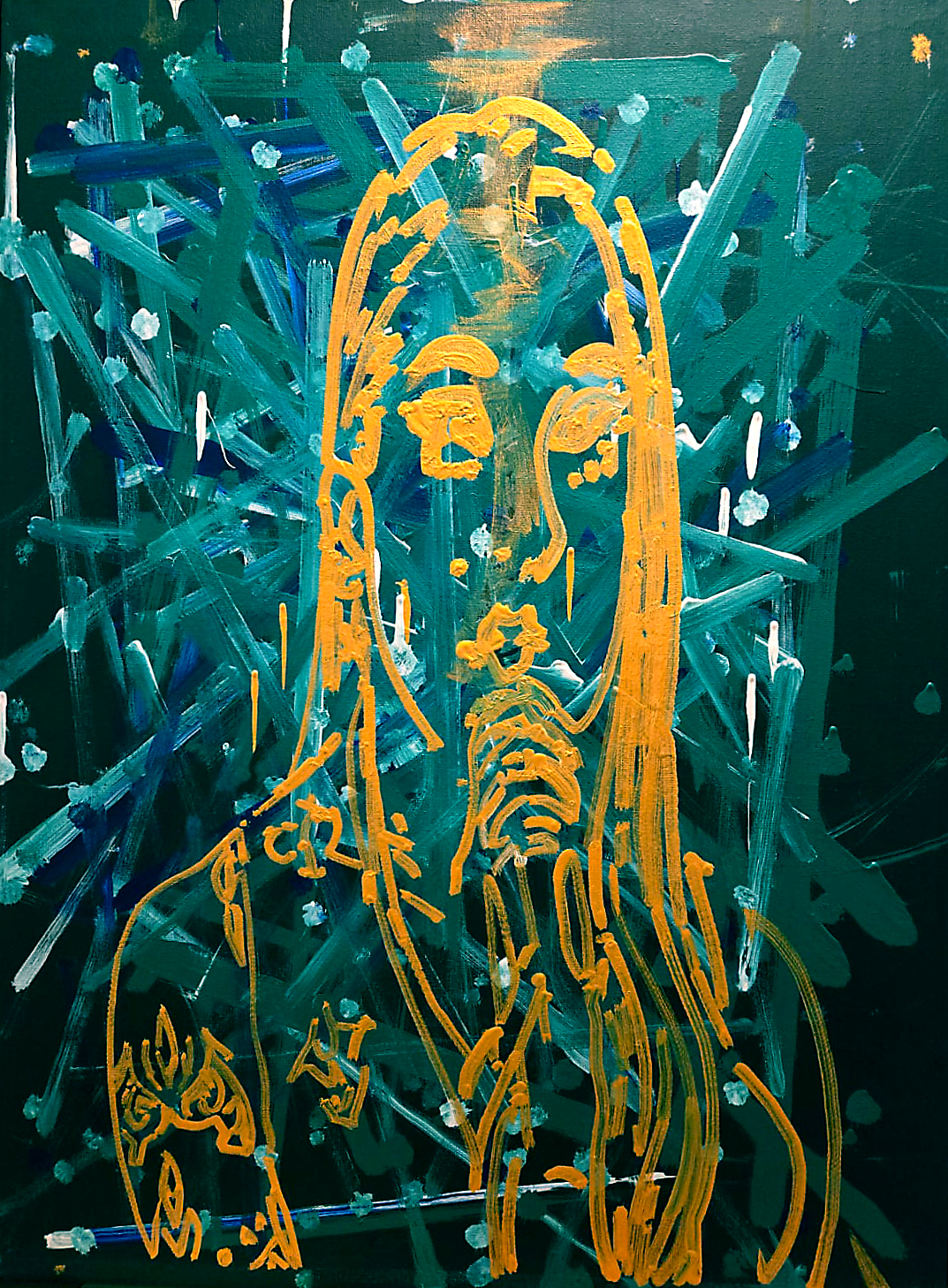
That question now sits at the centre of work at the Enabling Alliance Labs.
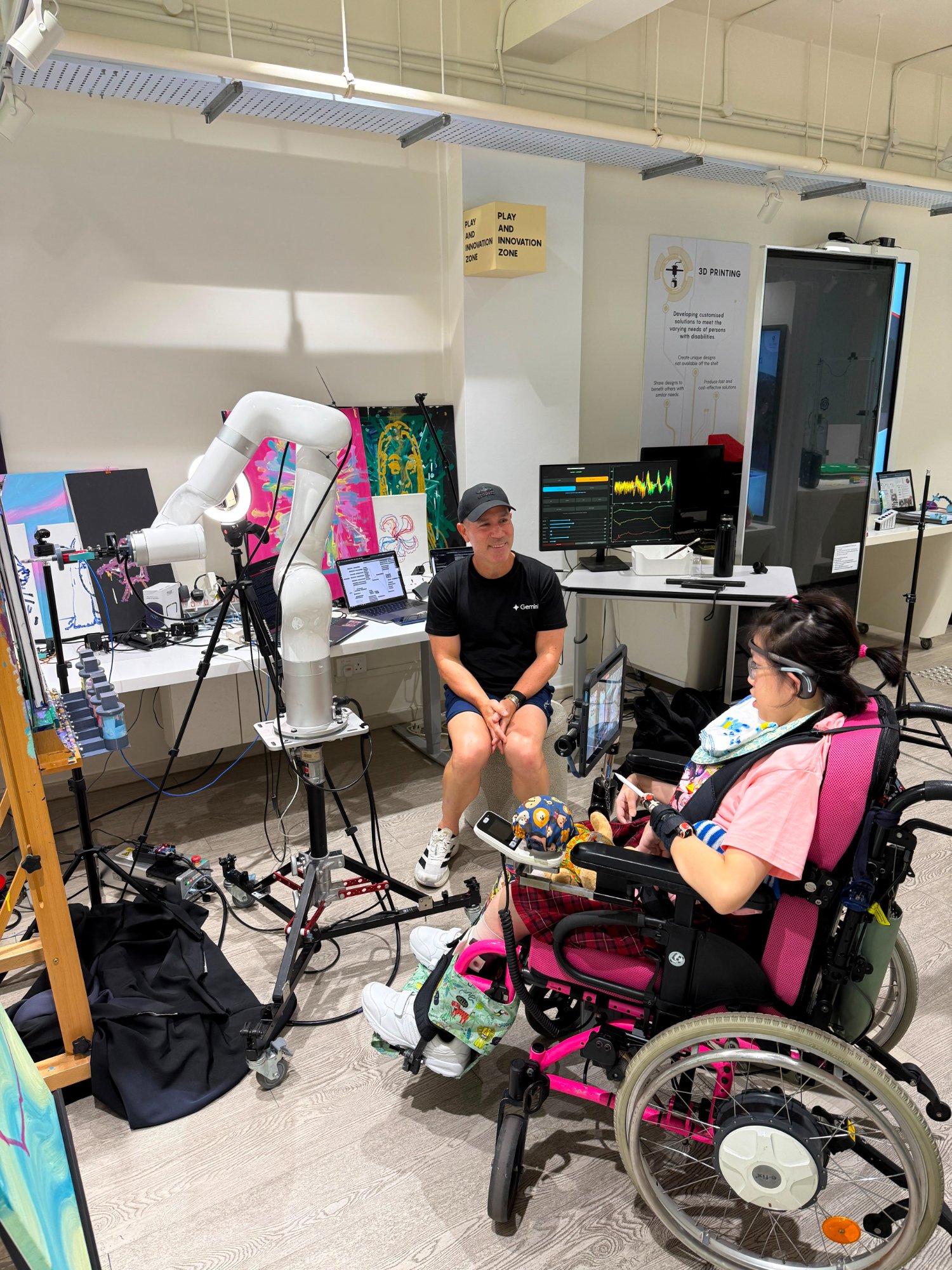
With Tesseract MindFlow, we're building ways for people who find it difficult or impossible to hold a paintbrush to create art. A headset picks up attention and other signals, which help a person guide a robotic brush. Working with collaborators including brain-interface researcher Jackie Tan and disability advocate Kai Ming Ng, we've demonstrated this with people painting through the system in Singapore. Sofia, who lives with a rare form of Leukodystrophy and can't speak or control her movements, painted a flower and her favourite animal, via brain computer interface to create the strokes. The person makes the creative choices. Our job is to make those choices possible.
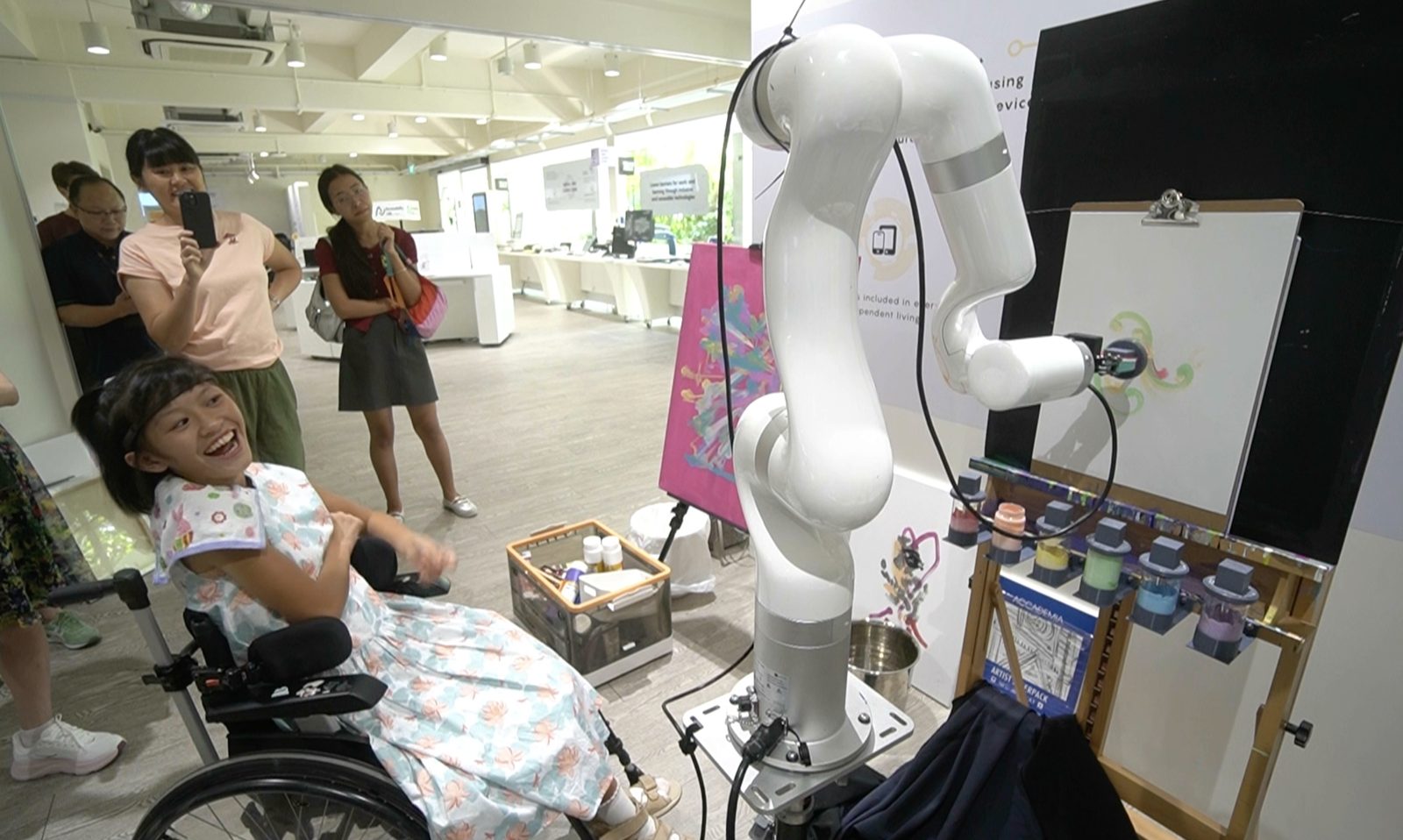
I'm based in Singapore, where I continue to build and research these systems through Enabling Alliance Labs. The labs were founded to bring together researchers, universities, government and non-profit organisations, including SG Enable and CPAS, to help people with disabilities access creative expression and gainful employment. There's still plenty I don't know. Finding people who know what I don't, and making something together, has been a recurring part of the work.
I'd like the work on brain interfaces to extend beyond art, into ways for people to work and support themselves, even if they cannot easily leave home. Many of the jobs AI creates need a human in the loop, watching an automated process and stepping in when something goes wrong, and that work does not require being in the room. That's a longer-term ambition. For now, helping someone make something of their own is a good reason to keep building.
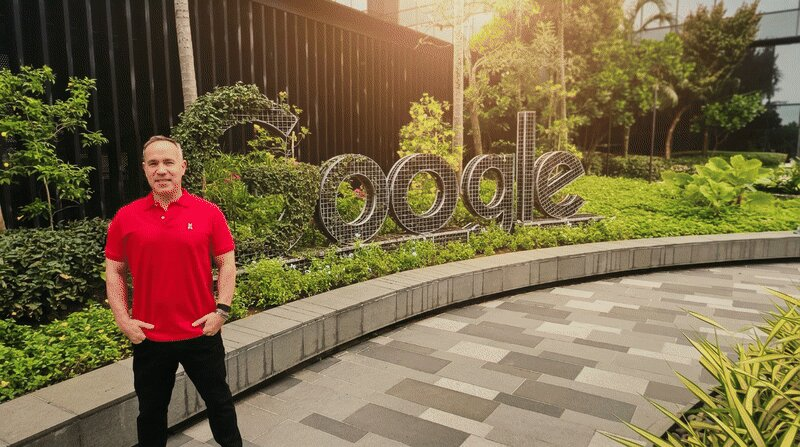
In October 2026 I re-joined Google as Director, Head of AI Innovation, Delta JAPAC: Google Cloud Consulting's AI innovation, transformation and engineering practice across Japan and Asia Pacific. The early years of my Google career were spent helping launch and scale platforms like YouTube, Android and Geo across this region, so supporting the next major platform shift, to agentic AI, feels like coming home.
The conversation with enterprise leaders across JAPAC has moved past simple experimentation. Organisations are looking to turn strategic AI disruption into scalable, production-grade transformation that fundamentally reimagines how work gets done. I have the privilege of supporting a multidisciplinary team of engineers, architects and AI strategists, working alongside the region's most ambitious enterprises. By combining Google's frontier models and full-stack AI architecture with deep engineering execution, we are building agentic systems that solve complex challenges and deliver measurable impact across industries. One stack: from silicon to agent!
Tesseract is now a part of the Enabling Alliance as one of the Lab's projects. The work with partners including SG Enable, SPD, CPAS, SUTD, NTU and more goes on, and continues to be the focus of my doctoral thesis.
October 2026
Areas of Work
Embodied AI & Robotics
Building robotic systems that combine computer vision, language models, diffusion models, and real-time signal processing to produce physical generative outputs.
Generative & Multimodal AI
Developing cross-modal AI pipelines for Synthaesthetic Art, translating between sound, image, and motion through generative models and robotic systems.
Developer Ecosystems
Translating frontier AI research into developer reference implementations, technical demonstrations, and educational content that help engineers build with emerging AI technologies.
AI Research & Publications
NeurIPS and ACM HAI published research exploring human-machine creative collaboration, real-time interactive systems, and cross-modal generative AI.
Education
Patents
Awards & Recognition
Advisory, Boards & Media
Experience
Generative AI platform converting enterprise knowledge into dynamic video learning. Won the Google Gemini Hackathon Singapore; bootstrapped and now post-revenue with direct customers and partnerships.
Doctorate in Emerging Technologies researching human-machine creative collaboration, embodied AI, and multimodal generative systems.
AI music-therapy digital therapeutic designed to predict and prevent agitation in dementia patients through wearable biometrics and adaptive music. Now in clinical trials across Australia.
Advises on global go-to-market and developer-ecosystem adoption for Apptest.ai's agentic AI software-testing platform.
Embodied-AI and robotics lab in Singapore. Built BCI-controlled robotic painting, Synthaesthetic Art, and the Reachy Rap Battle, with live demonstrations at AI.Engineer, SuperAI, and Google I/O.
Climate-tech platform for carbon projects and markets. Architected Verity Carbon, a web3-enabled digital MRV platform, with mobile data-authentication technology now published as a patent application in India and via ARIPO.
Managed C-level technology relationships for startups, scale-ups, and emerging unicorns across APAC, driving Azure and AI adoption and technical enablement.
Built advanced analytics, data science, and AI capability across APAC logistics. Led a world-first quantum-computing solution to the logistics bin-packing problem (Honeywell H1, with Cambridge Quantum) and a live space-logistics session with NASA's Artemis program.
Led technology at experience agency Imagination and partnered at Mosaic. At Hanson Robotics, conceived Sophia the Robot's AI text-to-singing voice, featured on The Tonight Show Starring Jimmy Fallon.
Head of Emerging Technology APAC. Developed and launched Accenture Liquid Studios across seven markets (200+ engagements in FY17) and served as APAC lead keynote speaker for Accenture Technology Vision.
Built distributed engineering and data-science teams across four countries and generated four patent applications. Supported the ASX listing, the first Silicon Valley company to list on the ASX, and a $40M AUD institutional placement (about $50M AUD raised in total).
Co-founded Jumptank, an innovation practice operating across 29 agencies in ANZ, building IP, software, and physical products, and co-created the Fuse content platform.
Launched YouTube portals and monetization across APAC and supported the first Android devices in the region. Invented and patented Underwater Street View. Built Show Your Vote with the UNFCCC (184 countries, 5.67M users) and was a founding member of Google's Global Creative Council.
Led software and hardware engineering teams and product strategy for high-performance professional-audio platforms across Australia and the US.
Analog and digital signal processing, computational acoustics, and loudspeaker measurement in Berkeley, California. Co-authored AES papers and co-developed patented loudspeaker methods (US 6,081,602).