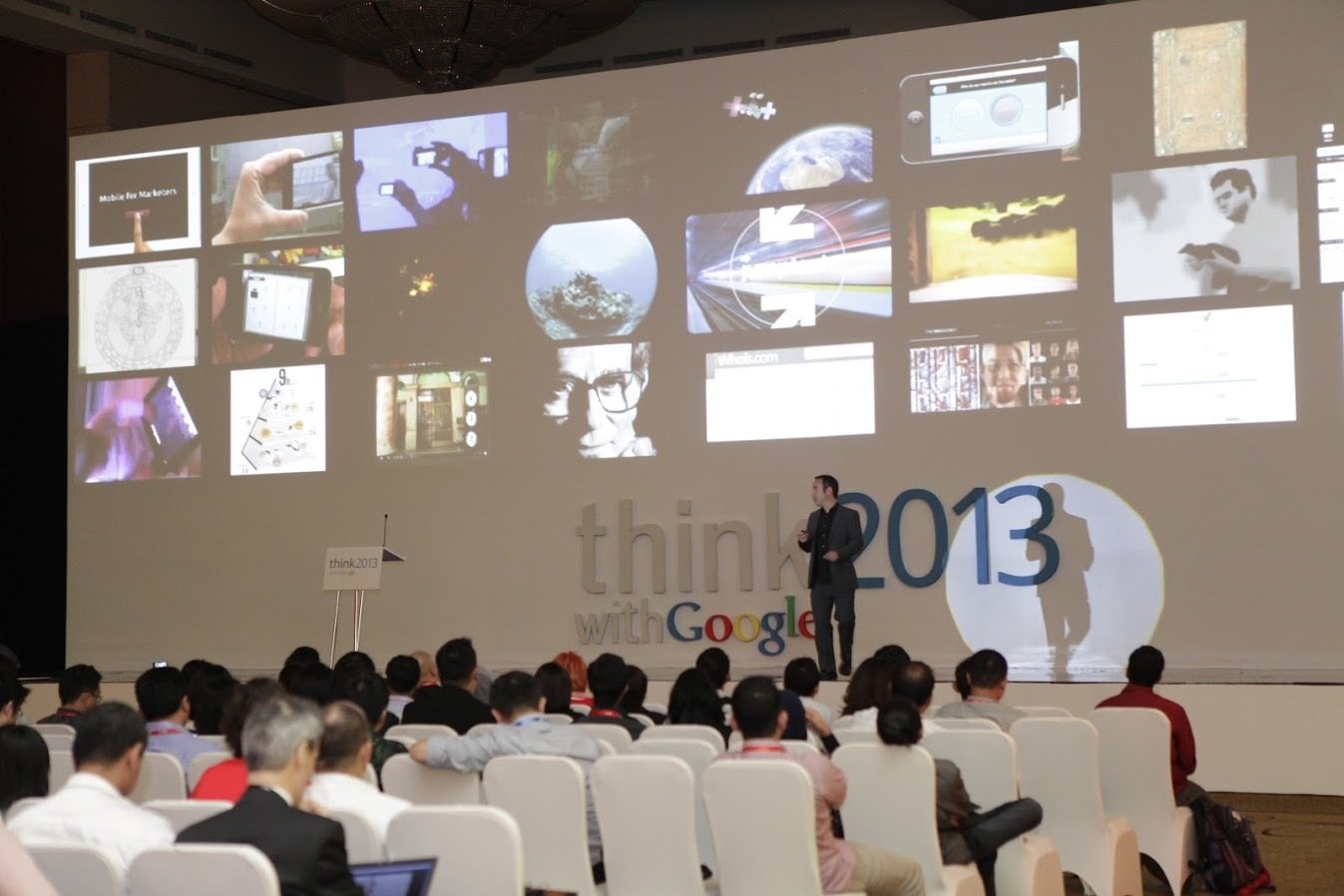
The Matrix in Beijing
A custom presentation tool, a room full of Chinese government officials, and a talk about the future of mobile that mattered more than most people in the room realised.
Every year the Chinese government holds a conference that shapes real decisions: policy, regulation, and who gets to keep their internet content provider license. For a company like Google, that license is not a detail. It is the thing that lets you do business at all. I was asked to speak, on mobile and the future of mobile computing, and I did not want to give an ordinary talk.
So I built a tool I called the Matrix. Instead of slides, I stood in front of a moving matrix of video content and spoke across it, pulling threads together in real time. It was a way of showing the future rather than describing it, and it landed.
I did not fully understand how well it had landed until the translated microblog streams came back. People wrote that the Google speaker was the highlight of the day, that the ideas had real substance, that the style was so different from everyone else's, that after the Google talk they did not want to stay for anything else. Our government relations team told me the presentation had a genuine, measurable effect on our relationship with the government and on the review of our license.
I am proud of that one in a quiet way. I helped the business at the most fundamental level, not with a deal or a product, but by walking into a hard room and being worth listening to.