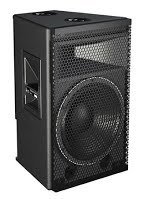
Meyer Sound: Engineering the Sound of the World's Stages
Research and development engineering at Meyer Sound Laboratories in Berkeley: computational acoustics, digital signal processing, and loudspeaker measurement systems behind concert halls and stadiums.
Co-invented US Patent 6,081,602 (arrayable two-way loudspeaker system) and co-authored multiple Audio Engineering Society papers on far-field loudspeaker interaction and acoustic prediction.
As a research and development engineer at Meyer Sound Laboratories in Berkeley, California, I worked on the analog and digital systems behind large-scale professional sound. The work combined computational acoustics, digital signal processing, and rigorous physical measurement. It became the technical foundation for everything that followed in my career.
Loudspeaker measurement and prediction
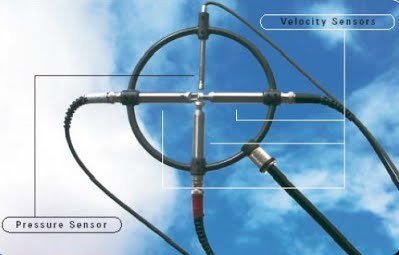
Much of the work focused on understanding how loudspeakers behave in the real world: far-field polar patterns, the interaction between multiple sources, and the accuracy of acoustic prediction. To measure it properly, we built specialised instrumentation, including a three-dimensional sound intensity probe.
Acoustic prediction for real venues
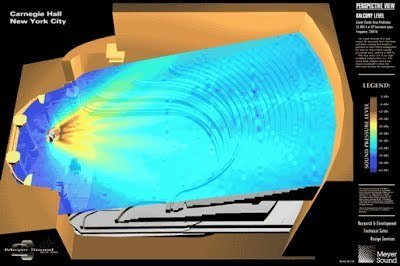
These methods fed directly into predicting how systems would perform in real performance spaces, from concert halls to stadiums.
Measurement systems
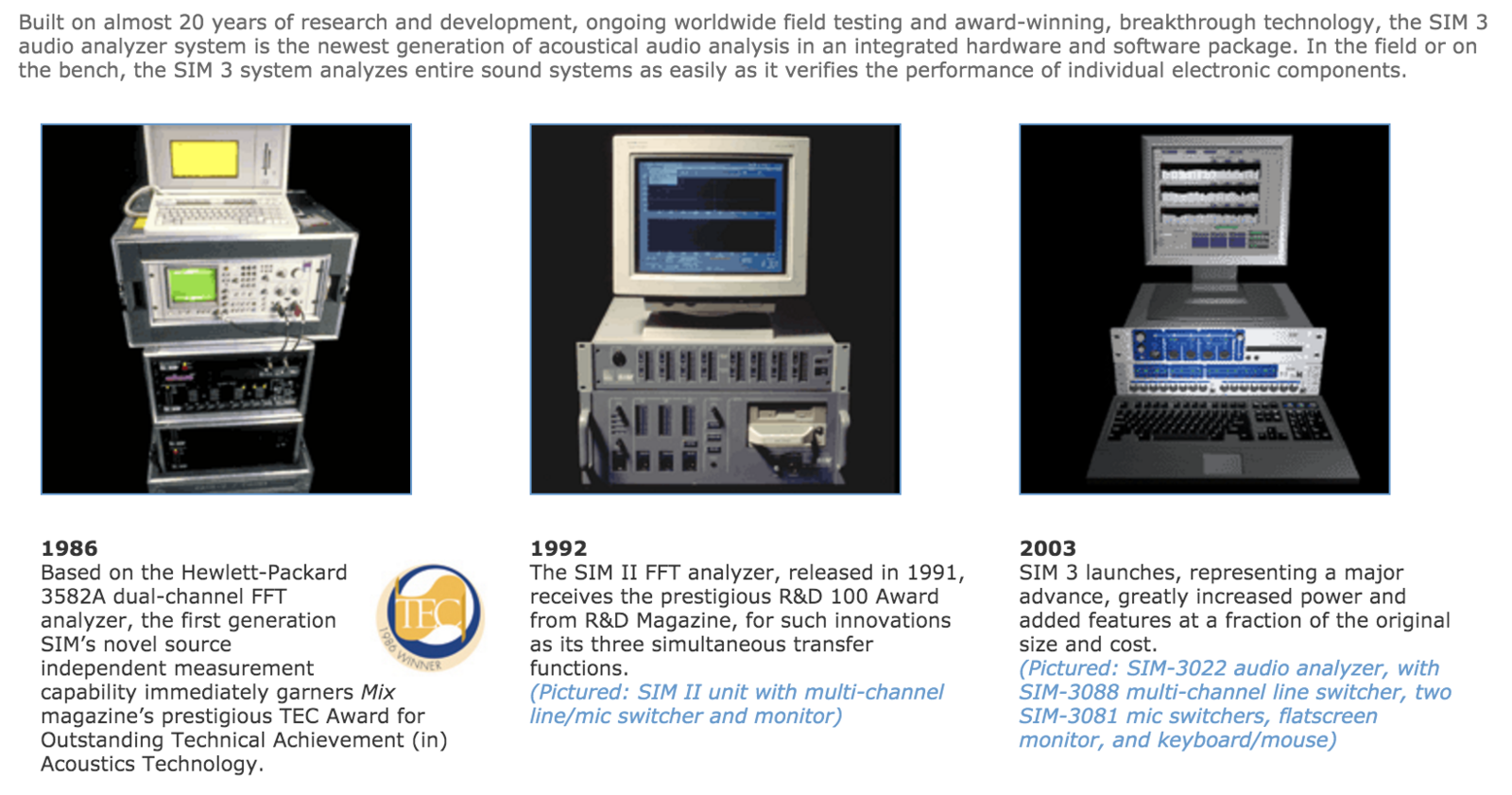
The measurement work connected to a long lineage of Meyer's SIM analysis systems, refined over two decades.
This period produced a granted US patent, "Arrayable Two-Way Loudspeaker System and Method" (US 6,081,602), co-invented with John D. Meyer and Paul J. Kohut, and a series of Audio Engineering Society papers on far-field loudspeaker interaction and electroacoustic prediction.